

Fatima Bhutto calls for boycott after British Museum removes ‘Palestine’
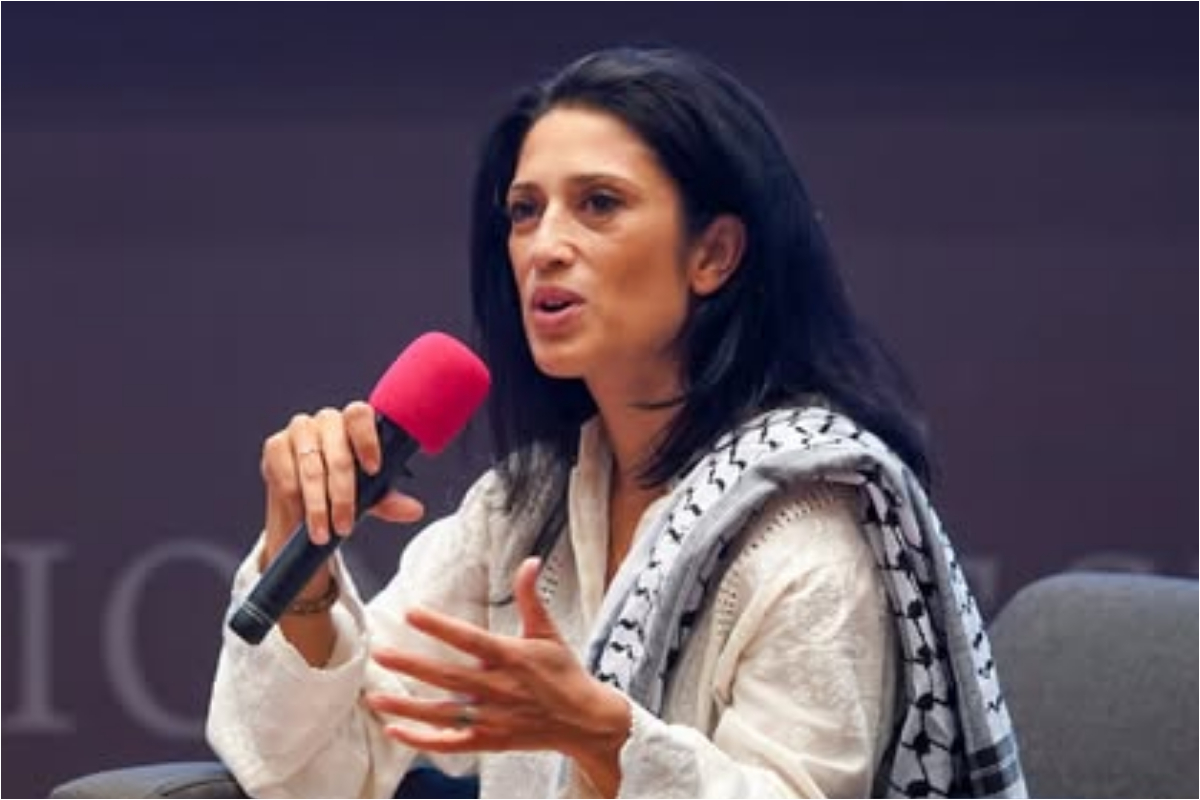
Political writer and commentator FatimaBhutto has called for a boycott after the famed British Museum removed the word “Palestine” from displays about the ancient Middle East.
“Stop visiting the “British” museum, stop buying tickets. Boycott,” she said in a post on X, while sharing the news that museum removed references to Palestine.
Stop visiting the “British” museum, stop buying tickets. Boycott https://t.co/56FSn4MbPA
— fatima bhutto 🇵🇸🇱🇧 (@fbhutto) February 16, 2026
Historian William Dalrymple said it was “ridiculous” of the British Museum to remove the word ‘Palestine” from its displays, saying it has “greater antiquity than the word “British”.”
“The first reference to Palestine is on the Egyptian monument of Medinet Habu in 1186BCE. The first reference to Britain is the 4th century BC when it appears in the work of the Greek traveler Pytheas of Massalia,” he said on X.
Ridiculous of the British Museum to remove the word ‘Palestine” from its displays, when it has a greater antiquity than the word “British”. The first reference to Palestine is on the Egyptian monument of Medinet Habu in 1186BCE. The first reference to Britain is the 4th century… https://t.co/bw1PqJh3k5
— William Dalrymple (@DalrympleWill) February 15, 2026
The British Museum has removed the word “Palestine” from displays about the ancient Middle East following “concerns” by a United Kingdom-based Israeli advocacy group.
The British Museum has confirmed that it is reviewing and updating some gallery panels and labels after “Audience testing has shown that the historic use of the term Palestine … is in some circumstances no longer meaningful,” UK Lawyers for Israel (UKLFI) said in a statement.
The group claimed there were “historically inaccurate” references to Palestine in displays covering the ancient Levant and Egypt. It said applying a single name across thousands of years “erases historical changes and creates a false impression of continuity.”
The statement said that responding to the concerns, the British Museum’s spokesperson confirmed it was in the process of reviewing and updating panels and labels on a case-by-case basis.
“For example, the information panels in the Levant gallery, covering the period 2000-300 BC, have all been updated to describe in some detail the history of Canaan and the Canaanites and the rise of the kingdoms of Judah and Israel using those names. A revised text devoted to the Phoenicians was installed in early 2025,” it added.